
Genesis
Exodus
Leviticus
Numbers
Deuteronomy
Joshua
Judges
Ruth
1 Samuel
2 Samuel
1 Kings
2 Kings
1 Chronicles
2 Chronicles
Ezra
Nehemiah
Esther
Job
Psalms
Proverbs
Ecclesiastes
Song of Solomon
Isaiah
Jeremiah
Lamentations
Ezekiel
Daniel
Hosea
Joel
Amos
Obadiah
Jonah
Micah
Nahum
Habakkuk
Zephaniah
Haggai
Zechariah
Malachi
HOLY BIBLE
BOOK OF GENESIS
GENESIS 10
1These are the generations of Noah's sons: Shem, Ham, and Japheth; and sons were born to them after the flood.
2The sons of Japheth: Gomer, and Magog, and Madai, and Javan, and Tubal, and Meshech, and Tiras.
3And the sons of Gomer: Ashkenaz, and Riphath, and Togarmah.
4And the sons of Javan: Elishah, and Tarshish, and Kittim, and Rodanim.
5From these the maritime peoples spread into their lands. These were the sons of Japheth in their lands, with their own language, by their families, in their nations.
6And the sons of Ham: Cush, and Mizraim, and Phut, and Canaan.
7And the sons of Cush: Seba, and Havilah, and Sabtah, and Raamah, and Sabtecha. And the sons of Raamah: Sheba, and Dedan.
8Cush begot Nimrod; he was the first on earth to become a mighty warrior.
9He was a mighty hunter before the LORD; therefore it is said, Like Nimrod the mighty hunter before the LORD.
10And the beginning of his kingdom was Babel, and Erech, and Accad, and Calneh, all of them being in the land of Shinar.
11From that land he went to Assyria, and built Nineveh, Rehoboth-ir, Calah,
12And Resen, between Nineveh and the great city Calah.
13And Mizraim begot Ludim, and Anamim, and Lehabim, and Naphtuhim,
14And Pathrusim, and Casluhim (from whom came the Philistines), and Caphtorim.
15And Canaan begot Sidon his firstborn, and Heth;
16And the Jebusite, and the Amorite, and the Girgasite,
17And the Hivite, and the Arkite, and the Sinite,
18And the Arvadite, and the Zemarite, and the Hamathite; and afterwards the families of the Canaanites were scattered.
19And the border of the Canaanites was from Sidon, as you go toward Gerar, as far as Gaza; as you go toward Sodom, and Gomorrah, and Admah, and Zeboiim, even to Lasha.
20These are the sons of Ham, according to their families, their languages, by their lands and their nations.
21To Shem also, the father of all the children of Eber, and elder brother of Japheth, children were born.
22The sons of Shem: Elam, and Asshur, and Arpachshad, and Lud, and Aram.
23And the children of Aram: Uz, and Hul, and Gether, and Mash.
24And Arpachshad begot Salah, and Salah begot Eber.
25To Eber were born two sons: the name of one was Peleg, for in his days the earth was divided; and his brother's name was Joktan.
26And Joktan begot Almodad, and Sheleph, and Hazarmaveth, and Jerah,
27And Hadoram, and Uzal, and Diklah,
28And Obal, and Abimael, and Sheba,
29And Ophir, and Havilah, and Jobab; all these were sons of Joktan.
30And their dwelling place was from Mesha, as far as Sephar, the hill country of the east.
31These are the sons of Shem, according to their families, and their languages, their lands, and their nations.
32These are the families of the sons of Noah, according to their generations, in their nations; and from these the nations spread abroad after the flood.
This is the Bible Overview
View Commentaries for Genesis Chapter 1
The Stories of the Bible – Read here
"Charity suffereth long, and is kind; charity envieth not; charity vaunteth not itself, is not puffed up,"
- 1 Corinthians 13:4
Bible Related Topics
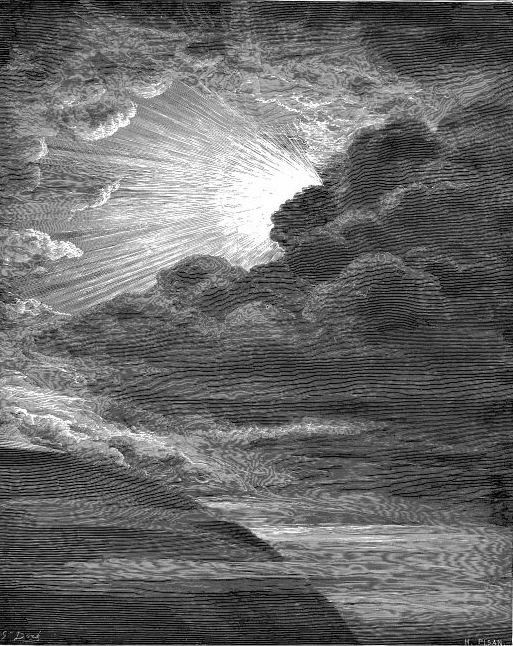
- St. Basil the Great – Hexaemeron (Orthodox, 4th century)
- Description: Nine homilies on the six days of creation (Genesis 1:1-31), exploring both literal and spiritual meanings. Basil emphasizes God’s omnipotence, the instantaneous nature of creation, and the cosmos’s order, integrating philosophical insights with Scripture.
- Relevance: A foundational Orthodox text, ideal for your site’s authoritative exegesis.
- Source: Available in English via Fathers of the Church series (Catholic University of America Press) or CCEL.org (public domain).
- St. Ambrose of Milan – Hexaemeron (Catholic, 4th century)
- Description: Six sermons on the creation days, heavily influenced by St. Basil but adapted for a Latin audience. Ambrose blends literal and allegorical interpretations, focusing on God’s providence and creation’s harmony.
- Relevance: A key Catholic commentary, complementing Orthodox perspectives.
- Source: Public domain, available via NewAdvent.org or Fathers of the Church series.
- St. Ephrem the Syrian – Commentary on Genesis (Orthodox/Catholic, Syriac tradition, 4th century)
- Description: A verse-by-verse exegesis of Genesis, including Genesis 1, with a focus on literal interpretation and Syriac theological traditions. Ephrem’s concise style emphasizes doctrinal fidelity and spiritual insights.
- Relevance: Bridges Catholic and Orthodox traditions, ideal for your Septuagint-based focus.
- Source: Translated in St. Ephrem the Syrian: Selected Prose Works (Catholic University of America Press).
- St. Augustine of Hippo – The Literal Meaning of Genesis (Catholic, early 5th century)
- Description: Augustine’s detailed commentary explores literal and allegorical readings, proposing that the “days” of Genesis 1 may be instantaneous or symbolic, reflecting God’s eternal act. It addresses creation’s purpose and God’s eternity.
- Relevance: A cornerstone of Catholic exegesis, offering intellectual depth.
- Source: Public domain, available via NewAdvent.org or Works of St. Augustine.
- St. John Chrysostom – Homilies on Genesis (Orthodox, 4th century)
- Description: A series of 67 homilies, with several covering Genesis 1, focusing on literal interpretation and moral/spiritual lessons. Chrysostom’s pastoral style makes the text accessible yet profound.
- Relevance: Widely respected in Orthodox tradition, suitable for lay readers.
Melchizedek Order
Educational Tools
Quick Links
Get In Touch
123 Main Street
New York, NY 10001
- Email: contact@mysite.com
- Phone: 123-456-7890
- Hours: Mon-Fri 9:00AM - 5:00PM
© 2026 All Rights Reserved.