
Genesis
Exodus
Leviticus
Numbers
Deuteronomy
Joshua
Judges
Ruth
1 Samuel
2 Samuel
1 Kings
2 Kings
1 Chronicles
2 Chronicles
Ezra
Nehemiah
Esther
Job
Psalms
Proverbs
Ecclesiastes
Song of Solomon
Isaiah
Jeremiah
Lamentations
Ezekiel
Daniel
Hosea
Joel
Amos
Obadiah
Jonah
Micah
Nahum
Habakkuk
Zephaniah
Haggai
Zechariah
Malachi
HOLY BIBLE
BOOK OF GENESIS
GENESIS 37
1And Jacob dwelt in the land where his father was a stranger, in the land of Canaan.
2These are the generations of Jacob. Joseph was seventeen years old, and was feeding the flock with his brethren, the sons of his father's wives, Bilhah and Zilpah; and Joseph brought back a bad report about them to their father.
3Now Israel loved Joseph more than all his children, because he was the son of his old age; and he had made him a coat of many colours.
4When his brethren saw that their father loved him more than any of them, they hated Joseph, and could not speak peaceably to him.
5And Joseph dreamed a dream, and he told his brethren; and they hated him even more.
6He said to them, Hear this dream that I have dreamed:
7We were binding sheaves in the field, and suddenly my sheaf arose and stood upright, while your sheaves gathered around it and bowed down to my sheaf.
8And his brethren said to him, Will you indeed reign over us? Do you truly think you will have dominion over us? And they hated him even more for his dreams and for his words.
9Then he had another dream and told it to his brethren, saying, Look, I have had another dream. The sun, the moon, and eleven stars were bowing down to me.
10When he told his father and his brethren, his father rebuked him and said, What is this dream that you had? Will I and your mother, and your brethren, really come and bow down to you?
11And his brethren envied him, but his father kept the matter in mind.
12Now his brethren went to feed their father's flock in Shechem,
13And Israel said to Joseph, Your brethren are feeding the flock in Shechem. Come, I will send you to them. Joseph answered, I am ready.
14So Jacob said to him, Go and see whether all is well with your brethren and the flocks, and bring me word again. So Jacob sent him from the valley of Hebron, and when Joseph came to Shechem,
15A man found him wandering in the field, and the man asked him, What are you seeking?
16He replied, I seek my brethren. Please tell me where they are feeding their flocks?
17The man said, They have departed here, for I heard them say, Let us go to Dothan. So Joseph went after his brethren and found them in Dothan.
18And they saw him from a distance, and before he came near them, they plotted to kill him.
19And they said to one another, Here comes the master dreamer.
20Come now, let us slay him, and cast him into some pit; we will say, Some wild beast has devoured him. Then we will see how his dreams turn out.
21When Reuben heard this, he rescued Joseph from their hands, saying, Let us not take his life.
22Reuben said to them, Shed no blood, but cast him into this pit that is in the wilderness, but lay no hand on him; intending to save him from them and restore him to his father.
23So it came to be, when Joseph came to his brethren, they stripped Joseph out of his coat, the coat of many colours that he wore;
24And they took him and cast him into a pit. Now the pit was empty; there was no water in it.
25Then sitting down to eat bread, they looked up and saw a company of Ishmaelites coming from Gilead. Their camels were carrying spices, balm and myrrh down to Egypt.
26Then Judah said to his brethren, What profit is there if we slay our brother and conceal his blood?
27Come, let us sell him to the Ishmaelites, but let's not lay our hands on him; for he is our brother, our own flesh. And his brethren agreed.
28So when the Midianites merchantmen passed by, his brethren drew and lifted Joseph out of the pit, and sold him to the Ishmaelites for twenty pieces of silver. The Ishmaelites then took Joseph to Egypt.
29When Reuben later returned to the pit and found that Joseph was not in it, he rent his clothes.
30He returned to his brethren and said, The boy is not there! And I, where can I go?
31So they took Joseph's coat, killed a young goat, and dipped the coat in the blood.
32Then they brought the coat of many colours to their father, and said, We found this; do you know whether it is your son's coat or not?
33And he recognized it, and said, It is my son's coat! A wild beast has devoured him! Joseph has surely been torn to pieces!
34Then Jacob rent his clothes, put on sackcloth, and mourned for his son many days.
35All his sons and daughters rose to comfort him, but he refused to be comforted. No, he said, I will go to my grave mourning my son. So Joseph's father wept for him.
36And the Midianites sold him in Egypt to Potiphar, an officer of Pharaoh's, and captain of the guard.
This is the Bible Overview
View Commentaries for Genesis Chapter 1
The Stories of the Bible – Read here
"Charity suffereth long, and is kind; charity envieth not; charity vaunteth not itself, is not puffed up,"
- 1 Corinthians 13:4
Bible Related Topics
- St. Basil the Great – Hexaemeron (Orthodox, 4th century)
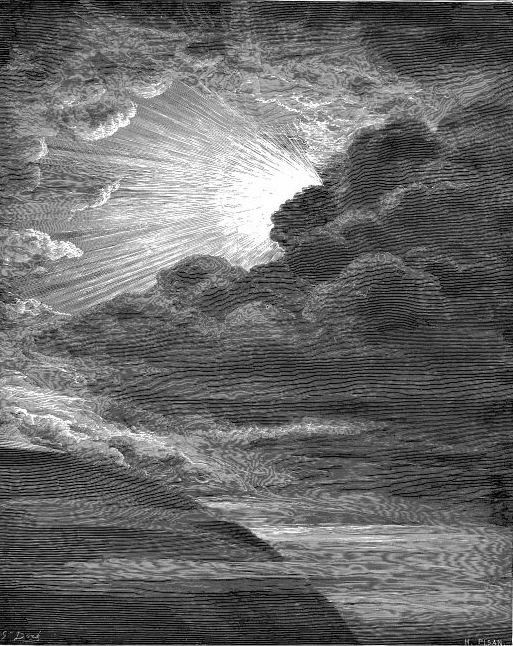
- Description: Nine homilies on the six days of creation (Genesis 1:1-31), exploring both literal and spiritual meanings. Basil emphasizes God’s omnipotence, the instantaneous nature of creation, and the cosmos’s order, integrating philosophical insights with Scripture.
- Relevance: A foundational Orthodox text, ideal for your site’s authoritative exegesis.
- Source: Available in English via Fathers of the Church series (Catholic University of America Press) or CCEL.org (public domain).
- St. Ambrose of Milan – Hexaemeron (Catholic, 4th century)
- Description: Six sermons on the creation days, heavily influenced by St. Basil but adapted for a Latin audience. Ambrose blends literal and allegorical interpretations, focusing on God’s providence and creation’s harmony.
- Relevance: A key Catholic commentary, complementing Orthodox perspectives.
- Source: Public domain, available via NewAdvent.org or Fathers of the Church series.
- St. Ephrem the Syrian – Commentary on Genesis (Orthodox/Catholic, Syriac tradition, 4th century)
- Description: A verse-by-verse exegesis of Genesis, including Genesis 1, with a focus on literal interpretation and Syriac theological traditions. Ephrem’s concise style emphasizes doctrinal fidelity and spiritual insights.
- Relevance: Bridges Catholic and Orthodox traditions, ideal for your Septuagint-based focus.
- Source: Translated in St. Ephrem the Syrian: Selected Prose Works (Catholic University of America Press).
- St. Augustine of Hippo – The Literal Meaning of Genesis (Catholic, early 5th century)
- Description: Augustine’s detailed commentary explores literal and allegorical readings, proposing that the “days” of Genesis 1 may be instantaneous or symbolic, reflecting God’s eternal act. It addresses creation’s purpose and God’s eternity.
- Relevance: A cornerstone of Catholic exegesis, offering intellectual depth.
- Source: Public domain, available via NewAdvent.org or Works of St. Augustine.
- St. John Chrysostom – Homilies on Genesis (Orthodox, 4th century)
- Description: A series of 67 homilies, with several covering Genesis 1, focusing on literal interpretation and moral/spiritual lessons. Chrysostom’s pastoral style makes the text accessible yet profound.
- Relevance: Widely respected in Orthodox tradition, suitable for lay readers.
Melchizedek Order
Educational Tools
Quick Links
Get In Touch
123 Main Street
New York, NY 10001
- Email: contact@mysite.com
- Phone: 123-456-7890
- Hours: Mon-Fri 9:00AM - 5:00PM
© 2026 All Rights Reserved.