
Genesis
Exodus
Leviticus
Numbers
Deuteronomy
Joshua
Judges
Ruth
1 Samuel
2 Samuel
1 Kings
2 Kings
1 Chronicles
2 Chronicles
Ezra
Nehemiah
Esther
Job
Psalms
Proverbs
Ecclesiastes
Song of Solomon
Isaiah
Jeremiah
Lamentations
Ezekiel
Daniel
Hosea
Joel
Amos
Obadiah
Jonah
Micah
Nahum
Habakkuk
Zephaniah
Haggai
Zechariah
Malachi
HOLY BIBLE
BOOK OF GENESIS
GENESIS 21
1And the LORD visited Sarah as He had said, and the LORD did for Sarah what He had promised.
2For Sarah conceived, and bore Abraham a son in his old age, at the set time God had told him.
3Abraham named his son, whom Sarah bore him, Isaac.
4And when his son Isaac was eight days old, Abraham circumcised him, just as God had commanded him.
5Now Abraham was a hundred years old when his son Isaac was born to him.
6And Sarah said, God has made me laugh, and all that hear about this will laugh with me.
7Then she added, Who would ever have said to Abraham that Sarah would nurse children? Yet I have borne him a son in his old age.
8And the child grew and was weaned; and Abraham made a great feast the day that Isaac was weaned.
9But Sarah saw the son of Hagar the Egyptian, which she had borne to Abraham, mocking.
10So she said to Abraham, Cast out this bondwoman and her son; for the son of this bondwoman shall not be heir along with my son Isaac!
11And the matter was very distressing to Abraham because Ishmael was his son.
12And God said to Abraham, Do not be distressed because of the boy and your bondwoman. Listen to all that Sarah has said to you, because through Isaac your offspring will be counted.
13As for the son of the bondwoman, I will also make a nation of him, for he is your offspring too.
14And Abraham rose early in the morning, and took bread and a bottle of water, and gave it to Hagar. He put them on her shoulder, gave her the child, and sent her away. And she departed, and wandered in the wilderness of Beersheba.
15When the water in the bottle was gone, she left the child under one of the shrubs.
16Then she went and sat down opposite him, a good way off, about a bowshot away; for she said to herself, I refuse to watch my child die. So she sat across from him, and wept uncontrollably.
17But God heard the voice of the boy; and the angel of God called to Hagar out of heaven, and said to her, What troubles you, Hagar? Fear not; for God has heard the voice of the boy from where he is.
18Get up, lift up the boy and hold him by the hand, for I will make a great nation of him.
19Then God opened her eyes and she saw a well of water. She went and filled the bottle with water and gave the boy a drink.
20And God was with the boy and he grew up; he dwelt in the wilderness and became an archer.
21He dwelt in the wilderness of Paran; and his mother took him a wife from the land of Egypt.
22At that time Abimelech and Phichol, the chief captain of his army said to Abraham, God is with you in all that you do.
23Now, swear to me here by God that you will not deal falsely with me, or with my offspring, or with my prosperity; but will deal with me and with the land where you have sojourned, as loyally as I have dealt with you.
24And Abraham said, I swear it.
25Then Abraham reproved Abimelech because of a well of water that Abimelech's servants had seized.
26Abimelech replied, I do not know who did this, neither did you tell me, nor did I hear of it until today.
27Then Abraham took sheep and oxen and gave them to Abimelech, and both of them made a covenant.
28Abraham then set seven ewe lambs of the flock by themselves.
29And Abimelech said to Abraham, What is the meaning of these seven ewe lambs which you have set aside?
30Abraham replied, You are to accept these seven ewe lambs from me as proof that I have dug this well.
31So he called that place Beersheba, because the two of them swore an oath there.So they made a covenant at Beersheba. Then Abimelech and Phichol, the chief captain of his army, rose and returned to the land of the Philistines.
32So they made a covenant at Beersheba. Then Abimelech and Phichol, the chief captain of his army, rose and returned to the land of the Philistines.
33And Abraham planted a tamarisk tree in Beersheba, and called there on the Name of the LORD, the Everlasting God.
34And Abraham sojourned in the land of the Philistines' many days.
This is the Bible Overview
View Commentaries for Genesis Chapter 1
The Stories of the Bible – Read here
"Charity suffereth long, and is kind; charity envieth not; charity vaunteth not itself, is not puffed up,"
- 1 Corinthians 13:4
Bible Related Topics
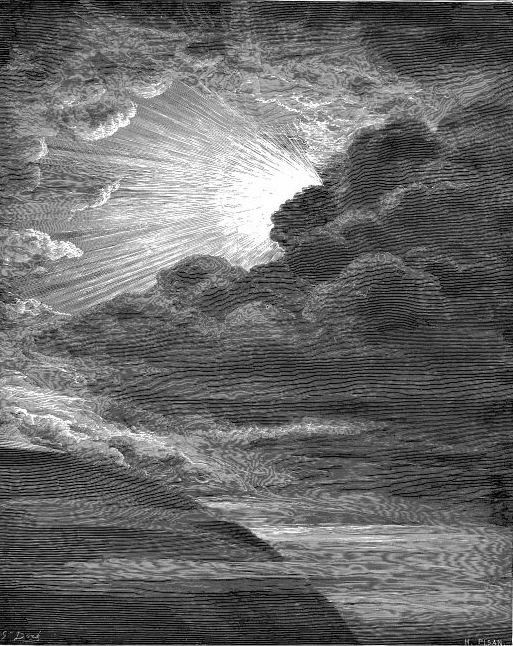
- St. Basil the Great – Hexaemeron (Orthodox, 4th century)
- Description: Nine homilies on the six days of creation (Genesis 1:1-31), exploring both literal and spiritual meanings. Basil emphasizes God’s omnipotence, the instantaneous nature of creation, and the cosmos’s order, integrating philosophical insights with Scripture.
- Relevance: A foundational Orthodox text, ideal for your site’s authoritative exegesis.
- Source: Available in English via Fathers of the Church series (Catholic University of America Press) or CCEL.org (public domain).
- St. Ambrose of Milan – Hexaemeron (Catholic, 4th century)
- Description: Six sermons on the creation days, heavily influenced by St. Basil but adapted for a Latin audience. Ambrose blends literal and allegorical interpretations, focusing on God’s providence and creation’s harmony.
- Relevance: A key Catholic commentary, complementing Orthodox perspectives.
- Source: Public domain, available via NewAdvent.org or Fathers of the Church series.
- St. Ephrem the Syrian – Commentary on Genesis (Orthodox/Catholic, Syriac tradition, 4th century)
- Description: A verse-by-verse exegesis of Genesis, including Genesis 1, with a focus on literal interpretation and Syriac theological traditions. Ephrem’s concise style emphasizes doctrinal fidelity and spiritual insights.
- Relevance: Bridges Catholic and Orthodox traditions, ideal for your Septuagint-based focus.
- Source: Translated in St. Ephrem the Syrian: Selected Prose Works (Catholic University of America Press).
- St. Augustine of Hippo – The Literal Meaning of Genesis (Catholic, early 5th century)
- Description: Augustine’s detailed commentary explores literal and allegorical readings, proposing that the “days” of Genesis 1 may be instantaneous or symbolic, reflecting God’s eternal act. It addresses creation’s purpose and God’s eternity.
- Relevance: A cornerstone of Catholic exegesis, offering intellectual depth.
- Source: Public domain, available via NewAdvent.org or Works of St. Augustine.
- St. John Chrysostom – Homilies on Genesis (Orthodox, 4th century)
- Description: A series of 67 homilies, with several covering Genesis 1, focusing on literal interpretation and moral/spiritual lessons. Chrysostom’s pastoral style makes the text accessible yet profound.
- Relevance: Widely respected in Orthodox tradition, suitable for lay readers.
Melchizedek Order
Educational Tools
Quick Links
Get In Touch
123 Main Street
New York, NY 10001
- Email: contact@mysite.com
- Phone: 123-456-7890
- Hours: Mon-Fri 9:00AM - 5:00PM
© 2026 All Rights Reserved.