
Genesis
Exodus
Leviticus
Numbers
Deuteronomy
Joshua
Judges
Ruth
1 Samuel
2 Samuel
1 Kings
2 Kings
1 Chronicles
2 Chronicles
Ezra
Nehemiah
Esther
Job
Psalms
Proverbs
Ecclesiastes
Song of Solomon
Isaiah
Jeremiah
Lamentations
Ezekiel
Daniel
Hosea
Joel
Amos
Obadiah
Jonah
Micah
Nahum
Habakkuk
Zephaniah
Haggai
Zechariah
Malachi
HOLY BIBLE
BOOK OF GENESIS
GENESIS 41
1At the end of two full years, Pharaoh dreamed that he was standing by the Nile.
2And there came up out of the Nile seven sleek and fat cows; and they grazed amongst the reeds.
3Then seven other cows came up after them out of the Nile, ugly and gaunt, and stood by the other cows at the edge of the river.
4The ugly and gaunt cows ate the seven sleek and fat cows. Then Pharaoh awoke.
5He fell asleep again and dreamt a second time: Seven heads of grain, healthy and good, grew on a single stalk.
6Then seven heads of grain, thin and scorched by the east wind, sprung up after them.
7And the seven thin heads devoured the seven healthy, full heads. Then Pharaoh woke and saw that it was a dream.
8The next morning his spirit was troubled; so he sent for all the magicians of Egypt and all the wise men. Pharaoh told them his dreams, but there was none that could interpret them for him.
9The chief cupbearer then spoke up and said to Pharaoh, I remember my failures this day.
10Pharaoh was once angry with his servants, and he put me in prison in the captain of the guard's house, both myself and the chief baker.
11And one night both the chief baker and I had dreams; each of us had a dream with its own meaning.
12A young Hebrew was there with us, a servant to the captain of the guard. We told him our dreams, and he interpreted them for us, telling each the meaning of his dream.
13As he interpreted for us, so it came to pass: I was restored to my office, and the chief baker was hanged.
14Then Pharaoh summoned Joseph, and they brought him quickly out of the prison. When he had shaved himself and changed his clothes, he appeared before Pharaoh.
15And Pharaoh said to Joseph, I have had a dream and there is no one that can interpret it. Now I have heard it said of you, that you can interpret dreams.
16Joseph answered Pharaoh, saying, It is not I; God will give Pharaoh a sound answer.
17Then Pharaoh said to Joseph, In my dream I stood on the bank of the Nile.
18And there came up out of the Nile seven cows, sleek and fat; and they grazed in the reeds.
19Then seven other cows came up after them, scrawny, very ugly, and gaunt. Such ugliness I have never seen in all the land of Egypt.
20And the gaunt and ugly cows ate up the first seven fat cows.
21But when they had eaten them, no one would have known they had eaten them, for they were just as ugly as before. Then I awoke.
22In my other dream, I saw seven heads of grain, full and healthy, growing on one stalk.
23Then seven heads of grain, withered, thin, and scorched by the east wind, sprang up after them.
24And the thin heads of grain devoured the seven good heads. I told this to the magicians, but there was none that could interpret it for me.
25Joseph said to Pharaoh, The dreams of Pharaoh are one and the same; God has revealed to Pharaoh what He is about to do.
26The seven good cows are seven years, and the seven good heads of grain are seven years; the dreams are one.
27And the seven gaunt and ugly cows that followed them are seven years, as are also the seven empty heads of grain scorched by the east wind; they are seven years of famine.
28It is as I have told Pharaoh; God has revealed to Pharaoh what He is about to do.
29Seven years of great abundance will come throughout all the land of Egypt.
30But seven years of famine will occur after that, and all the abundance in the land of Egypt will be forgotten. Famine will consume the land.
31And the abundance will not be remembered because of the famine that will follow it, for it will be very severe.
32That Pharaoh had the same dream twice means that the matter is established by God, and God will shortly bring it to pass.
33So now let Pharaoh select a wise and discerning man, and set him over the land of Egypt.
34Pharaoh should do this; let him appoint overseers over the land, to collect one fifth of the produce of the land of Egypt during the seven years of plenty.
35Let them gather all the excess food of those good years that are coming, and store up grain under Pharaoh's authority, as food to be stored in the cities.
36This food shall be as a reserve for the land in preparation for the seven years of famine that will come to the land of Egypt, so that the land does not perish through famine.
37And this advice was good in the eyes of Pharaoh and all his servants.
38And Pharaoh said to his servants, Can we find a man like Joseph, a man in whom the Spirit of God is?
39So Pharaoh said to Joseph, Since God has shown you all this, there is no one as discerning and wise as you.
40You will oversee my household, and all my people will be under your command. Only with regard to the throne will I be greater than you.
41And Pharaoh said to Joseph, See, I have set you over all the land of Egypt.
42Then Pharaoh took his signet ring from his hand and put it on Joseph's hand. He clothed him in fine linen and put a gold chain around his neck.
43Pharaoh had him ride in the chariot of his second in command, and they cried before him, Bow the knee! Thus he set him over all the land of Egypt.
44Pharaoh said to Joseph, I am Pharaoh, but without a word from you, let no man lift up his hand or foot in all the land of Egypt.
45And Pharaoh called Joseph's name Zaphnath-paneah and gave him Asenath daughter of Potipherah, priest of On, to be his wife. So Joseph took charge over all the land of Egypt.
46Joseph was thirty years old when he began serving Pharaoh king of Egypt. And Joseph went out from the presence of Pharaoh, and went through all the land of Egypt.
47During the seven years of plenty, the land brought forth abundantly.
48Joseph collected all the food from the seven years of abundance in Egypt and stored it in the cities. In every city he stored the food gathered from the fields around it.
49Joseph stored up a vast amount of grain, like the sand of the sea, until he stopped counting, for it was without number.
50And two sons were born to Joseph before the famine came, whom Asenath the daughter of Potipherah, priest of On, bore to him.
51Joseph named the firstborn Manasseh, For God, he said, has made me forget all my troubles and all my father's house.
52And the second he named Ephraim, saying, Certainly God has made me fruitful in the land of my affliction.
53And the seven years of plenty in the land of Egypt came to an end.
54Then the seven years of famine began, just as Joseph had foretold. There was famine in all the other lands, but throughout the land of Egypt there was bread.
55And when all the land of Egypt was famished, and the people cried to Pharaoh for bread, he told all the Egyptians, Go to Joseph and do whatever he tells you.
56When the famine had spread over all the land, Joseph opened all the storehouses and sold grain to the Egyptians, for the famine was severe in the land of Egypt.
57So all the world came to Joseph in Egypt to buy grain, because the famine had become severe throughout the earth.
This is the Bible Overview
View Commentaries for Genesis Chapter 1
The Stories of the Bible – Read here
"Charity suffereth long, and is kind; charity envieth not; charity vaunteth not itself, is not puffed up,"
- 1 Corinthians 13:4
Bible Related Topics
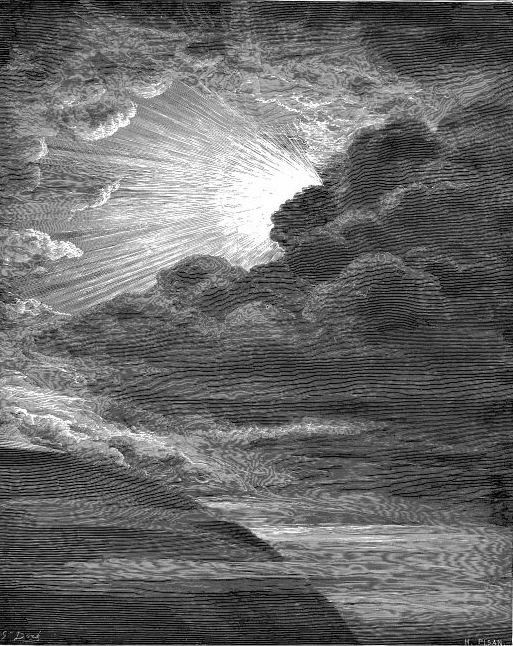
- St. Basil the Great – Hexaemeron (Orthodox, 4th century)
- Description: Nine homilies on the six days of creation (Genesis 1:1-31), exploring both literal and spiritual meanings. Basil emphasizes God’s omnipotence, the instantaneous nature of creation, and the cosmos’s order, integrating philosophical insights with Scripture.
- Relevance: A foundational Orthodox text, ideal for your site’s authoritative exegesis.
- Source: Available in English via Fathers of the Church series (Catholic University of America Press) or CCEL.org (public domain).
- St. Ambrose of Milan – Hexaemeron (Catholic, 4th century)
- Description: Six sermons on the creation days, heavily influenced by St. Basil but adapted for a Latin audience. Ambrose blends literal and allegorical interpretations, focusing on God’s providence and creation’s harmony.
- Relevance: A key Catholic commentary, complementing Orthodox perspectives.
- Source: Public domain, available via NewAdvent.org or Fathers of the Church series.
- St. Ephrem the Syrian – Commentary on Genesis (Orthodox/Catholic, Syriac tradition, 4th century)
- Description: A verse-by-verse exegesis of Genesis, including Genesis 1, with a focus on literal interpretation and Syriac theological traditions. Ephrem’s concise style emphasizes doctrinal fidelity and spiritual insights.
- Relevance: Bridges Catholic and Orthodox traditions, ideal for your Septuagint-based focus.
- Source: Translated in St. Ephrem the Syrian: Selected Prose Works (Catholic University of America Press).
- St. Augustine of Hippo – The Literal Meaning of Genesis (Catholic, early 5th century)
- Description: Augustine’s detailed commentary explores literal and allegorical readings, proposing that the “days” of Genesis 1 may be instantaneous or symbolic, reflecting God’s eternal act. It addresses creation’s purpose and God’s eternity.
- Relevance: A cornerstone of Catholic exegesis, offering intellectual depth.
- Source: Public domain, available via NewAdvent.org or Works of St. Augustine.
- St. John Chrysostom – Homilies on Genesis (Orthodox, 4th century)
- Description: A series of 67 homilies, with several covering Genesis 1, focusing on literal interpretation and moral/spiritual lessons. Chrysostom’s pastoral style makes the text accessible yet profound.
- Relevance: Widely respected in Orthodox tradition, suitable for lay readers.
Melchizedek Order
Educational Tools
Quick Links
Get In Touch
123 Main Street
New York, NY 10001
- Email: contact@mysite.com
- Phone: 123-456-7890
- Hours: Mon-Fri 9:00AM - 5:00PM
© 2026 All Rights Reserved.