

Genesis
Exodus
Leviticus
Numbers
Deuteronomy
Joshua
Judges
Ruth
1 Samuel
2 Samuel
1 Kings
2 Kings
1 Chronicles
2 Chronicles
Ezra
Nehemiah
Esther
Job
Psalms
Proverbs
Ecclesiastes
Song of Solomon
Isaiah
Jeremiah
Lamentations
Ezekiel
Daniel
Hosea
Joel
Amos
Obadiah
Jonah
Micah
Nahum
Habakkuk
Zephaniah
Haggai
Zechariah
Malachi
HOLY BIBLE
BOOK OF GENESIS
GENESIS 13
1So Abram went up out of Egypt, into the Negeb, with his wife and all that he had; and Lot with him.
2Now Abram was very rich in livestock, silver, and gold.
3And he went on his journey from the south as far as Bethel, to the place where his tent had been at the beginning, between Bethel and Ai;
4To the place where he had first built an altar; and there Abram called on the name of the LORD.
5And Lot also, who went with Abram, had flocks, herds, and tents,
6So that the land was not able to bear them, that they might dwell together; for their possessions were so great, that they could not remain together.
7And there was a strife between the herdmen of Abram's cattle and the herdmen of Lot's cattle. At that time the Canaanite and the Perizzite dwelled in the land.
8And Abram said to Lot, Let there be no strife between you and me, and between my herdmen and your herdmen; for we are brethren.
9Is not the whole land before you? Separate yourself from me: if you take the left hand, then I will go to the right; or if you go to the right, then I will go to the left.
10And Lot looked up and saw all the plain of Jordan, that it was well watered (this was before the LORD destroyed Sodom and Gomorrah), like the garden of the LORD, like the land of Egypt as you go toward Zoar.
11So Lot chose for himself the whole plain of the Jordan, and Lot journeyed east; and they parted one from the other.
12Abram dwelled in the land of Canaan, while Lot dwelled in the cities of the plain, and pitched his tents near Sodom.
13But the men of Sodom were very wicked sinners against the LORD.
14And the LORD said to Abram, after Lot had departed, Look from the place where you stand, to the north and south, and to the east and west;
15For all the land which you see I will give to you and to your offspring forever.
16And I will make your offspring as the dust of the earth, so that if a man could number the dust of the earth, then your offspring could also be numbered.
17Arise, walk through the land, through its length and its breadth; for I give it to you.
18So Abram removed his tent, and came and dwelt by the oaks of Mamre, which are in Hebron, and he built an altar there to the LORD.
This is the Bible Overview
View Commentaries for Genesis Chapter 1
The Stories of the Bible – Read here
"Charity suffereth long, and is kind; charity envieth not; charity vaunteth not itself, is not puffed up,"
- 1 Corinthians 13:4
Bible Related Topics
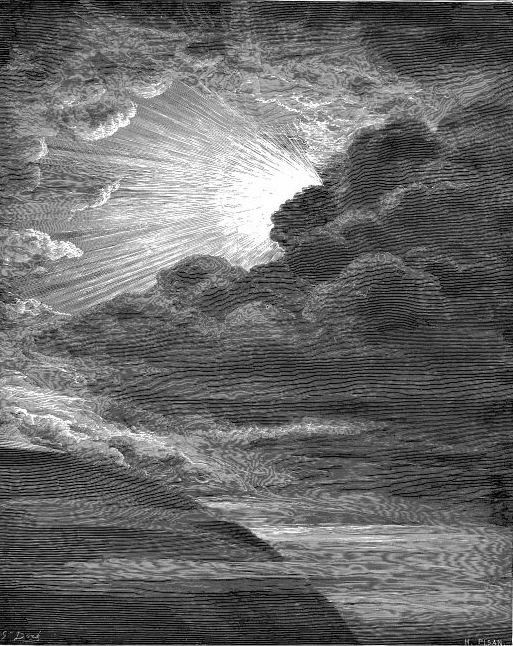
- St. Basil the Great – Hexaemeron (Orthodox, 4th century)
- Description: Nine homilies on the six days of creation (Genesis 1:1-31), exploring both literal and spiritual meanings. Basil emphasizes God’s omnipotence, the instantaneous nature of creation, and the cosmos’s order, integrating philosophical insights with Scripture.
- Relevance: A foundational Orthodox text, ideal for your site’s authoritative exegesis.
- Source: Available in English via Fathers of the Church series (Catholic University of America Press) or CCEL.org (public domain).
- St. Ambrose of Milan – Hexaemeron (Catholic, 4th century)
- Description: Six sermons on the creation days, heavily influenced by St. Basil but adapted for a Latin audience. Ambrose blends literal and allegorical interpretations, focusing on God’s providence and creation’s harmony.
- Relevance: A key Catholic commentary, complementing Orthodox perspectives.
- Source: Public domain, available via NewAdvent.org or Fathers of the Church series.
- St. Ephrem the Syrian – Commentary on Genesis (Orthodox/Catholic, Syriac tradition, 4th century)
- Description: A verse-by-verse exegesis of Genesis, including Genesis 1, with a focus on literal interpretation and Syriac theological traditions. Ephrem’s concise style emphasizes doctrinal fidelity and spiritual insights.
- Relevance: Bridges Catholic and Orthodox traditions, ideal for your Septuagint-based focus.
- Source: Translated in St. Ephrem the Syrian: Selected Prose Works (Catholic University of America Press).
- St. Augustine of Hippo – The Literal Meaning of Genesis (Catholic, early 5th century)
- Description: Augustine’s detailed commentary explores literal and allegorical readings, proposing that the “days” of Genesis 1 may be instantaneous or symbolic, reflecting God’s eternal act. It addresses creation’s purpose and God’s eternity.
- Relevance: A cornerstone of Catholic exegesis, offering intellectual depth.
- Source: Public domain, available via NewAdvent.org or Works of St. Augustine.
- St. John Chrysostom – Homilies on Genesis (Orthodox, 4th century)
- Description: A series of 67 homilies, with several covering Genesis 1, focusing on literal interpretation and moral/spiritual lessons. Chrysostom’s pastoral style makes the text accessible yet profound.
- Relevance: Widely respected in Orthodox tradition, suitable for lay readers.
Melchizedek Order
Educational Tools
Quick Links
Get In Touch
123 Main Street
New York, NY 10001
- Email: contact@mysite.com
- Phone: 123-456-7890
- Hours: Mon-Fri 9:00AM - 5:00PM
© 2026 All Rights Reserved.